 |
AJAX Error Sorry, failed to load required information. Please contact your system administrator. |

|
| Close | ||
According to him, the Bakun Dam has an estimated potential production capacity of 40,000 metric tonnes with production value of RM500 million per annum.
He said his ministry will also continue to identify suitable sites along the coastal areas to develop more Aquaculture Parks to expand the production of fish and shrimp produces to meet the domestic and international demand.
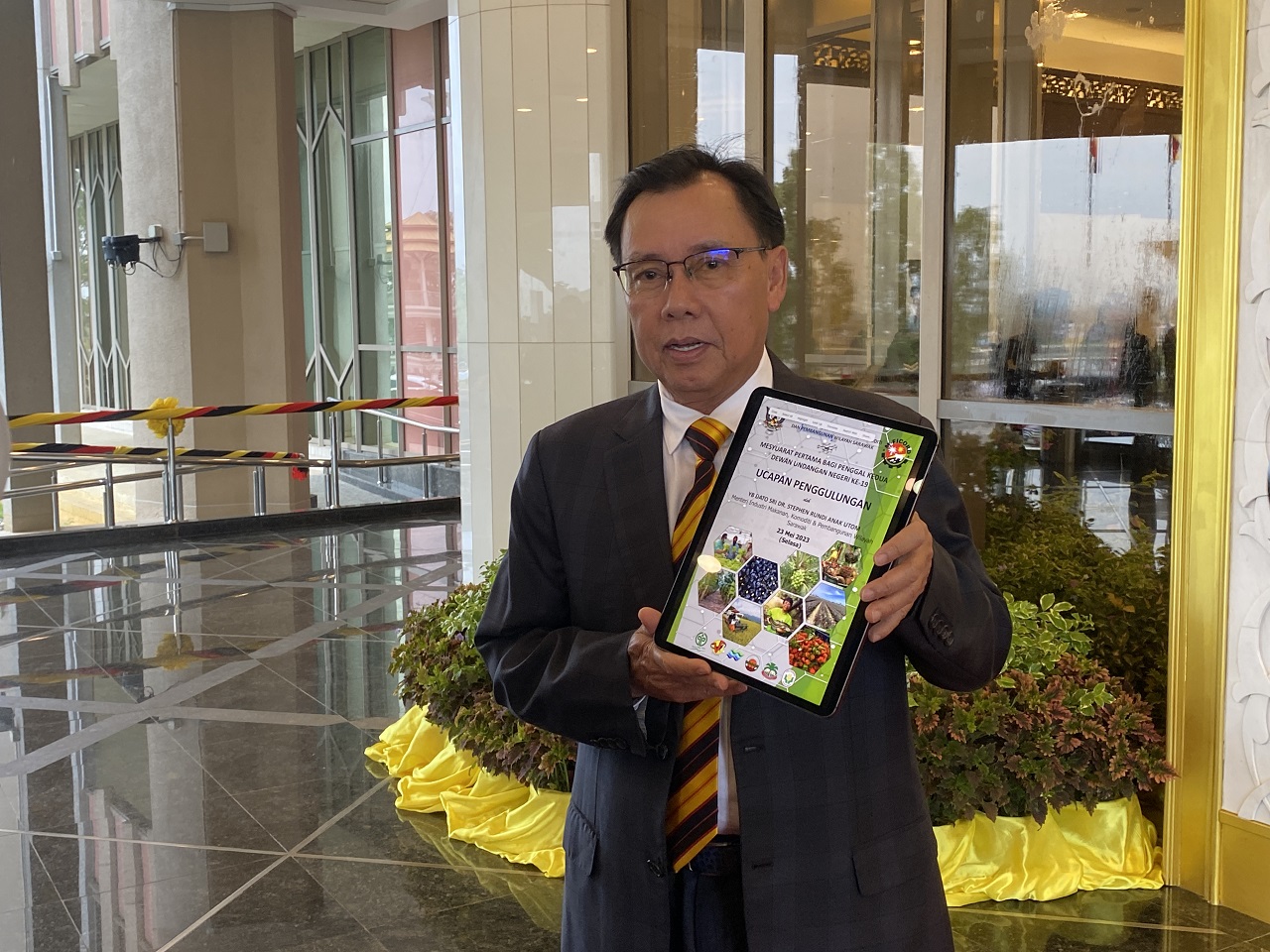
“The development of AIZs and Aquaculture Parks are important initiative to promote sustainable development of the aquaculture industry and contribute largely to the economic growth of Sarawak,” he said during his ministerial winding-up speech at the State Legislative Assembly today.

Bakun Dam. Photo: Sarawak Energy Berhad (SEB)
To date, Dr Rundi said four areas had been gazetted by the Sarawak government as AIZs namely the Batang Ai Dam in Lubok Antu, Loba Stoh Rambungan in Kuching, Sundar Awat-Awat in Lawas and Selalang in Sarikei for the production of high value fresh-and brackish-water fish and shrimp produces.
With Sarawak’s vast water bodies, he said the state has the potential to be developed as a regional hub for fish and shrimp production.
Dr Rundi pointed out that his ministry is also planning to establish indigenous fish belts namely Empurau and Tapah Belt in Kapit Division and Bintulu Division, respectively.
The Department of Agriculture Sarawak has taken the initiative to upgrade the existing facilities at the Inland Fisheries Holding Station, Song, Kapit to carry out the domestication and development of indigenous fishes such as Empurau, Semah, Labang, and Tengadak from Katibas and Balleh with an initial allocation of RM105,000, he added.
He said the centre will be renamed as Kapit Indigenous Fish Hatchery Centre (Pusat Pembenihan Ikan Asal Kapit).
“Besides, two satellite stations in Kapit Division namely Merirai and Engkuah Agriculture Station would also be developed as inland fisheries stations for high impact indigenous fishes’ aquaculture and conservation,” he said.
Dr Rundi said the proposed development of Tapah Belt in Bintulu will start with the upgrading of facilities at Sungai Sebiew Inland Fisheries Station, which will be renamed as Kemena Tapah Research and Development Centre.
He said among others, the centre will conduct research and development of Tapah fish as well as other high value blackwater ornamental fishes and aquatic plants.
He said a satellite research facility, the Tapah Research and Conservation Ulu Binyo Base Camp will also be established to focus on the Tapah fisheries researches.
On another note, Dr Rundi said Sarawak now is empowered to issue deep-sea fishing licences, following the empowerment of authority accorded to Sarawak Government by the federal government under MA63 agreement in 2022.
He pointed out that currently, there are 10,828 registered fishermen and 5,103 vessels, producing a total of 125,000 metric tonnes of fish per year with a value of over RM716 million.
“To date, the deep-sea fishing vessel quota that could be licensed in Sarawak waters stood at 560 vessels of which only 156 or 28 percent has been issued,” he said.
Dr Rundi said under the 12th Malaysia Plan (12MP), the Sarawak Marine Fisheries Department has been allocated more than RM17 million to manage fisheries resources and increase the fish production in Sarawak.
He believed that the proposed establishment of Sarawak-owned Department of Fisheries which is in the planning stage, will be able to accelerate and regulate the development of the fisheries industry in Sarawak.
“The main goal is to facilitate and encourage the people of Sarawak to be actively involved to tap the great potential in the deep-sea fishing sector,” he added.

Did You Know?
Department of Statistics Malaysia (DOSM) will conduct the Economic Census 2026 (BE2026). BE2026 is the sixth economic census, implemented every five years since 2000.
The census aims to collect comprehensive data covering all economic activities in the country, including the wholesale and retail trade sectors.
The implementation of BE2026 also covers business establishments as well as non-profit organisations. The data collected will serve as a vital reference to support more effective and sustainable national development planning.
For more information, please visit the official Facebook page of the Department of Statistics Malaysia or access through the links below:

